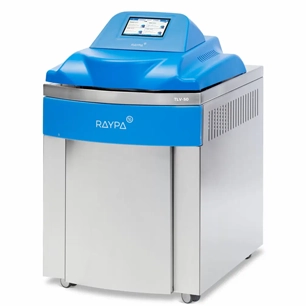
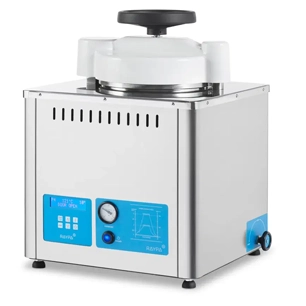
Request a quote
At LabSPX, we are committed to bringing innovative and efficient solutions to laboratories. Our Smart Lab Solutions are designed to streamline processes, enhance accuracy, and boost productivity.
| Specification | More info |
|---|---|
| Laboratory waste bags | The mechanical purge of air using the vacuum pump facilitates the posterior penetration of steam, facilitating the sterilization of bagged items. |
| Plastic and metal objects & glassware | In programs for solid loads, the heating jacket and vacuum pump are activated at the end of the sterilization phase to completely dry the load. |
| Objects with complex geometries | The multiple initial prevacuum pulses, in conjunction with the steam generator, ensure deep steam penetration across all surfaces. |
| Porous solids and wrapped objects | The mechanical purge of air using the vacuum pump facilitates the posterior penetration of steam, facilitating the sterilization of bagged items. |
| Liquids and culture media | Specific programs for liquid loads. Installing a flexible probe allows for more precise sterilization of liquid loads. |
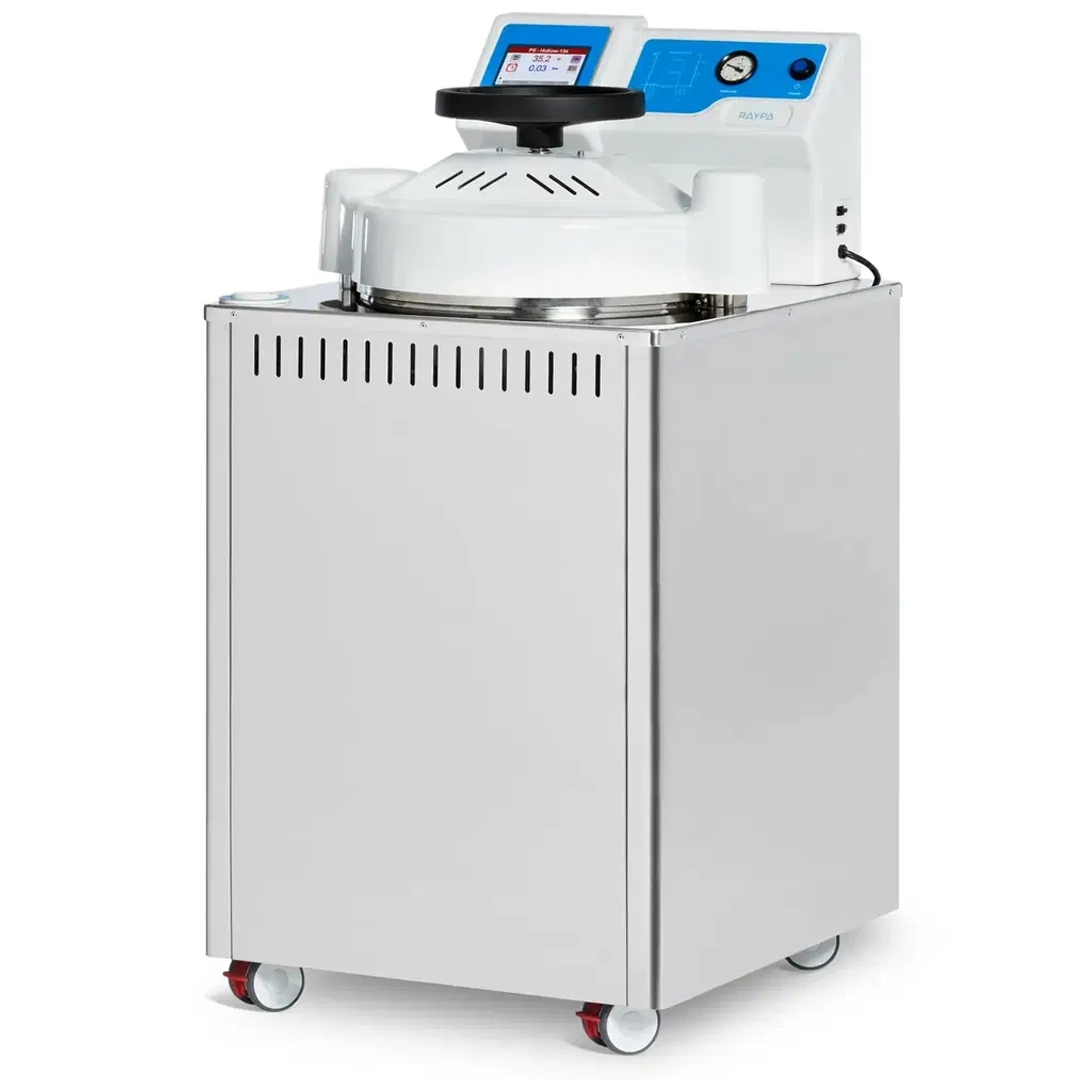
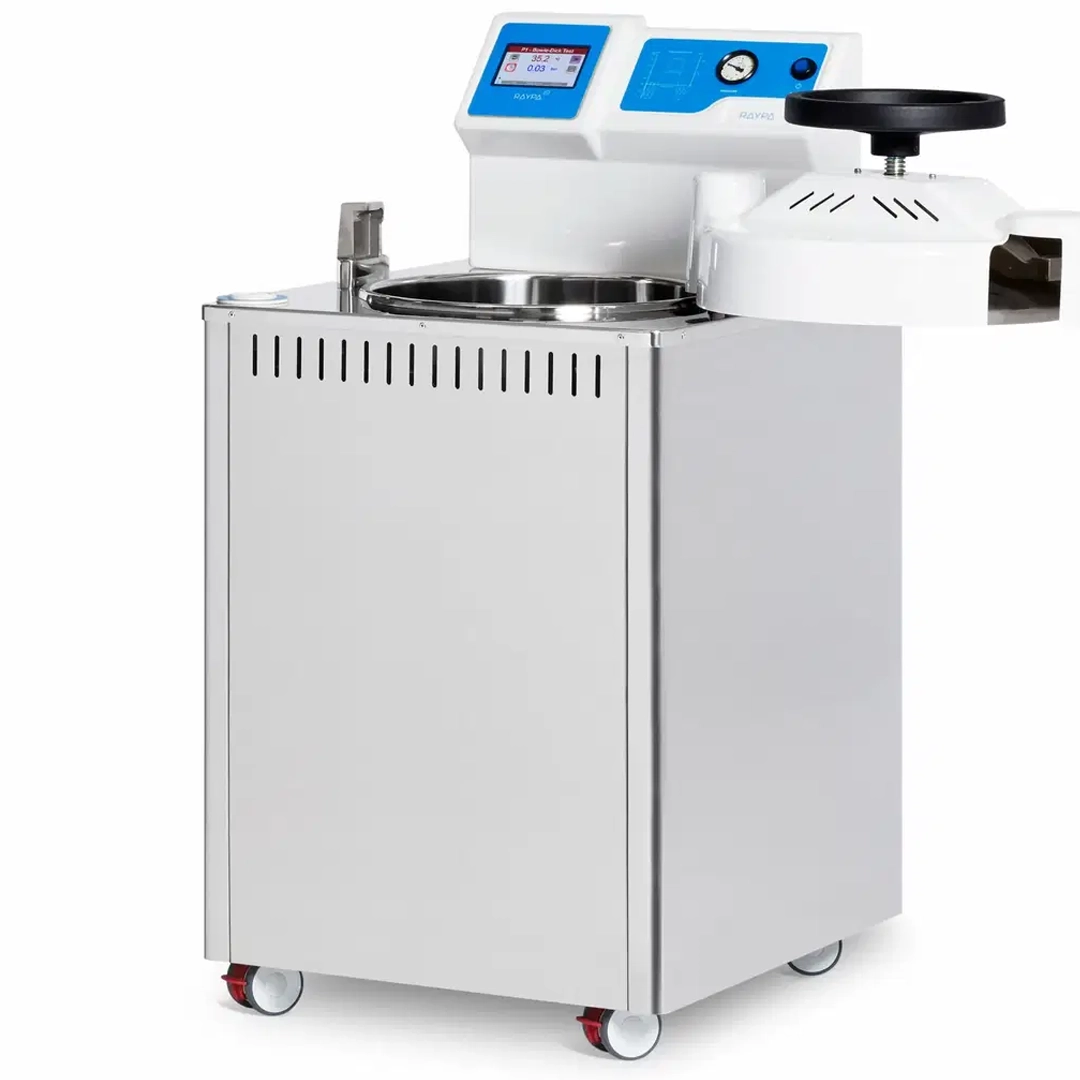
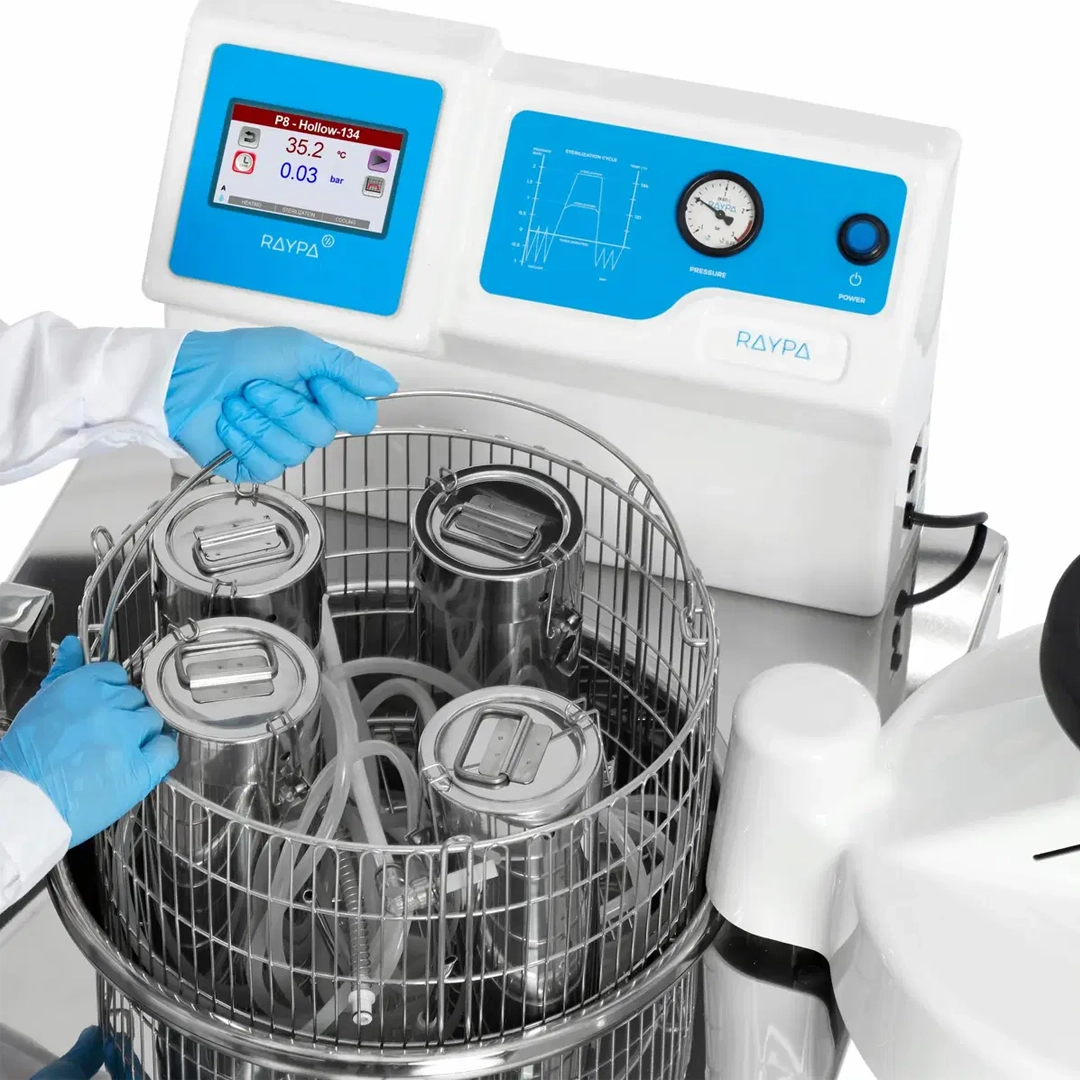
The AE-B Series vertical laboratory autoclaves with prevacuums and drying are designed for laboratories that require advanced sterilization performance for porous loads, wrapped items, hollow objects, and materials with complex geometries. These floor-standing autoclaves combine integrated steam generation, vacuum technology, and final drying functions to support a broad range of sterilization applications.
The AE-B Series is suitable for sterilizing:
The system is optimized for applications where effective steam penetration and complete drying are essential.
The autoclaves use one or multiple prevacuum pulses to mechanically remove air from the chamber and the load before sterilization begins.
During the prevacuum phase:
This process helps ensure effective sterilization across demanding load types.
The AE-B Series includes an integrated steam generator mounted outside the sterilization chamber. The system:
An optional upgrade allows automatic water supply directly from a water network.
For solid loads, the AE-B Series includes a final vacuum drying phase using:
This combination allows loads to emerge completely dry at the end of the cycle, reducing the need for external drying equipment and supporting safe handling of wrapped or porous materials.
The system is fully automatic and controlled through a 5” color touchscreen with PID microprocessor control.
Features include:
An optional flexible PT-100 Class A probe is available for more accurate liquid sterilization control.
An optional preheating stage can raise the chamber temperature up to 70 °C to reduce total cycle duration.
The vacuum pump removes air from the chamber and load using one or more vacuum pulses while steam generation begins.
The integrated steam generator injects saturated steam into the chamber until the programmed sterilization temperature is reached.
The chamber temperature is maintained precisely for the programmed sterilization time using a PT-100 Class A temperature probe. Optional flexible probe control is available for liquids.
For solid load programs, the vacuum pump and heating jacket dry the load after sterilization.
A natural cooling phase follows. An acoustic signal indicates when a safe opening temperature has been reached.
The AE-B Series incorporates multiple safety systems, including:
These systems support safe daily operation in laboratory environments.
| AE-50-B | AE-75-B | AE-110-B | AE-150-B | |
| Total/usable volume of the chamber (L) | 55/50 | 79/75 | 115/110 | 175/153 |
| Usable dimensions of the chamber (Ø x H mm) | 300 x 710 | 400 x 600 | 400 x 850 | 500 x 760 |
| External dimensions (L x D x H mm) | 505 x 580 x 1290 | 610 x 700 x 1185 | 610 x 700 x 1435 | 750 x 820 x 1400 |
| Loading height (mm) | 975 | 870 | 1120 | 1085 |
| Net weight (Kg) | 99 | 135 | 165 | 245 |
| Power (W) | 3600 | 3600 or 6000 | 6000 or 9000 | 6000 or 9000 |
| Voltage* (V) | 230 | 230 | 400 | 400 |
| Frequency (Hz) | 50/60 | 50/60 | 50/60 | 50/60 |
Download your brochure here!
Vertical autoclaves are loaded from the top. The chamber is oriented vertically, which means these units typically offer a larger internal capacity, allowing greater volumes to be sterilized in a single cycle. Their footprint is relatively compact, but they require adequate overhead clearance. Benchtop horizontal autoclaves are loaded through a front-facing door. The chamber is oriented horizontally, and the overall design is low-profile and compact, making these units well suited for laboratories or clinical environments where bench or floor space is limited. For more details, read this blogpost.
Explore similar solutions and complementary products.