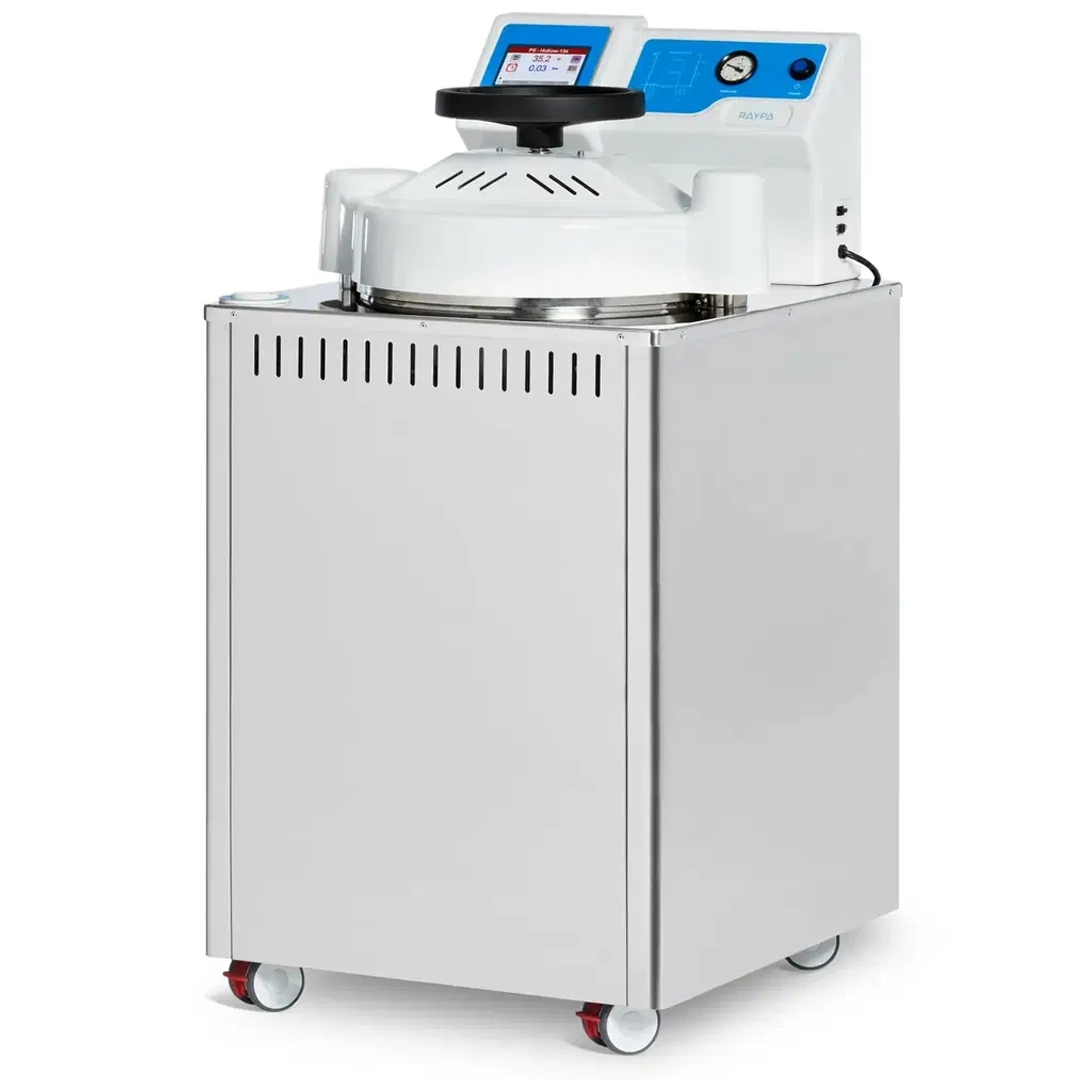
AVS-N Series

Top-loading benchtop autoclaves without drying for basic sterilization requirements
Economical and cost-effective
Limited laboratory resources consumption
Sterilization of solids and liquids

Request a quote

Request a quote

Smart lab solutions

At LabSPX, we are committed to bringing innovative and efficient solutions to laboratories. Our Smart Lab Solutions are designed to streamline processes, enhance accuracy, and boost productivity.

Functionalities and technical specifications

Specification More info
Liquids and culture mediaThe agar mode maintains the temperature and prevents the culture media from gelling. Installing a flexible probe allows for more precise sterilization of liquid loads.
Plastic and metal objects & glasswareFor a faster cooling phase in solids sterilization cycles, a quick unsteaming can be carried out through a manual valve and thus shorten the duration of the cooling phase.
GlasswareFor a faster cooling phase in solids sterilization cycles, a quick unsteaming can be carried out through a manual valve and thus shorten the duration of the cooling phase.
Laboratory waste bagsFor this application, the sterilization time should be extended and chemical and/or biological tests should be used to validate the correct sterilization of the load.

Top-loading benchtop laboratory autoclaves without drying

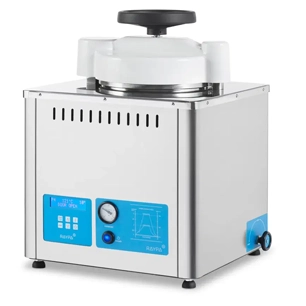
The AVS-N Series consists of compact, economical, top-loading benchtop autoclaves designed for basic sterilization needs in educational and research laboratories. They provide an accessible and efficient solution for routine sterilization of both solid and liquid loads.

These autoclaves are ideal for general laboratory sterilization applications, including:

  • Glassware and plastic materials
  • Metal laboratory utensils
  • Culture media and liquids
  • Laboratory waste bags and contaminated materials

Design characteristics

The AVS-N Series combines durability with compact functionality:

  • Sterilization chamber and external structure in stainless steel
  • Components sourced from high-quality manufacturers
  • Limited consumption of water, energy, and operator time
  • Compact footprint (chamber sizes from 8 to 15 L) suitable for small workspaces

Despite their size, they deliver full autoclave functionality in a reduced format.

Easy installation and operation

The AVS-N Series is suitable for straightforward use:

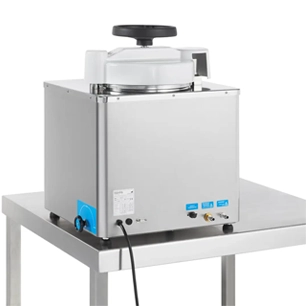
  • Plug-and-play installation with no dedicated plumbing required
  • Only requires a standard electrical connection
  • Can operate without connection to a drainage system
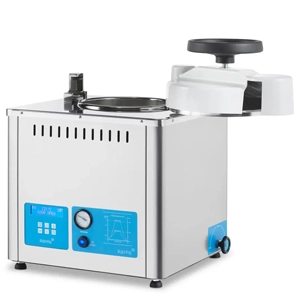
  • Includes basket, heating element protection rack, and drainage tube as standard

This makes them suitable for laboratories with limited infrastructure requirements.

How is operation controlled?

The system is managed through an intuitive control setup:

  • Automatic microprocessor-based control system
  • PID controller with 4 predefined and 6 editable programs
  • Adjustable parameters including time, temperature, and cycle type
  • Optional agar mode and temperature probe control
  • Integrated thermal printer and optional data management software
  • Programmable auto-start function

It monitors temperature using a PT-100 Class A probe located inside the chamber.

How does the sterilization cycle work?

The sterilization process is divided into three phases:

Heating phase
Heating elements located at the bottom of the chamber generate saturated steam by transferring energy to water inside the unit.

Sterilization phase
Once it reaches the set temperature, the system maintains stable conditions throughout the cycle. A PT-100 Class A probe controls this phase. For liquid loads, an optional flexible probe can be placed inside the sample for more precise control.

Cooling phase
After sterilization, the system enters a natural cooling phase. An acoustic signal indicates when it reaches a safe temperature and the chamber can be opened. For solid loads, you can use a manual valve to accelerate cooling. In agar mode, the system can maintain a set temperature between 40 °C and 80 °C.

Safety features

The AVS-N Series includes multiple safety systems to protect the operator:

  • Overpressure safety valve
  • Thermally insulated lid
  • Overtemperature safety thermostat
  • Open lid detection system
  • Independent pneumatic safety locking system preventing opening under pressure

These features ensure safe operation during routine laboratory use.

Available models:

AES-8 AES-12
Total/usable volume of the chamber (L) 8/6,8 15/13
Usable dimensions of the chamber (Ø x H mm) 220 x 180 250 x 280
External dimensions (L x D x H mm) 410 x 355 x 430 490 x 475 x 630
Loading height (mm) 320 435
Net weight (Kg) 12 38
Power (W) 1000 1000
Voltage* (V) 230 230
Frequency (Hz) 50/60 50/60


What is the difference between a vertical and a horizontal autoclave?

Read everything you need to know about autoclaves on this page. 

Brochures

Download your brochure here!

Brochure AVS-N Series
A top‑loading benchtop laboratory autoclave is used for routine sterilization of solid and liquid laboratory loads. These compact systems are commonly found in educational and research laboratories where space, infrastructure, and budget are limited but reliable steam sterilization is still required.
Benchtop autoclaves are suitable for sterilizing laboratory glassware, plastics, metal utensils, culture media, liquids, and laboratory waste bags. Their versatility makes them appropriate for general laboratory sterilization tasks rather than high‑throughput industrial use.
Benchtop autoclaves focus on basic sterilization functions and compact design. They generally do not include advanced drying systems but offer simplified operation, lower water and energy consumption, and plug‑and‑play installation, making them suitable for routine applications.
Plug‑and‑play installation allows an autoclave to operate using only a standard electrical connection, without dedicated plumbing or drainage. This simplifies installation, reduces setup costs, and enables use in laboratories with minimal infrastructure.
A standard cycle consists of a heating phase, a sterilization phase, and a cooling phase. Steam is generated during heating, the set temperature is maintained during sterilization, and the load cools naturally before the chamber can be safely opened.
For liquid loads, an optional flexible temperature probe can be placed directly inside the container. This allows the system to monitor the actual sample temperature instead of relying solely on chamber temperature, improving sterilization accuracy and safety.

Related instruments

Explore similar solutions and complementary products.
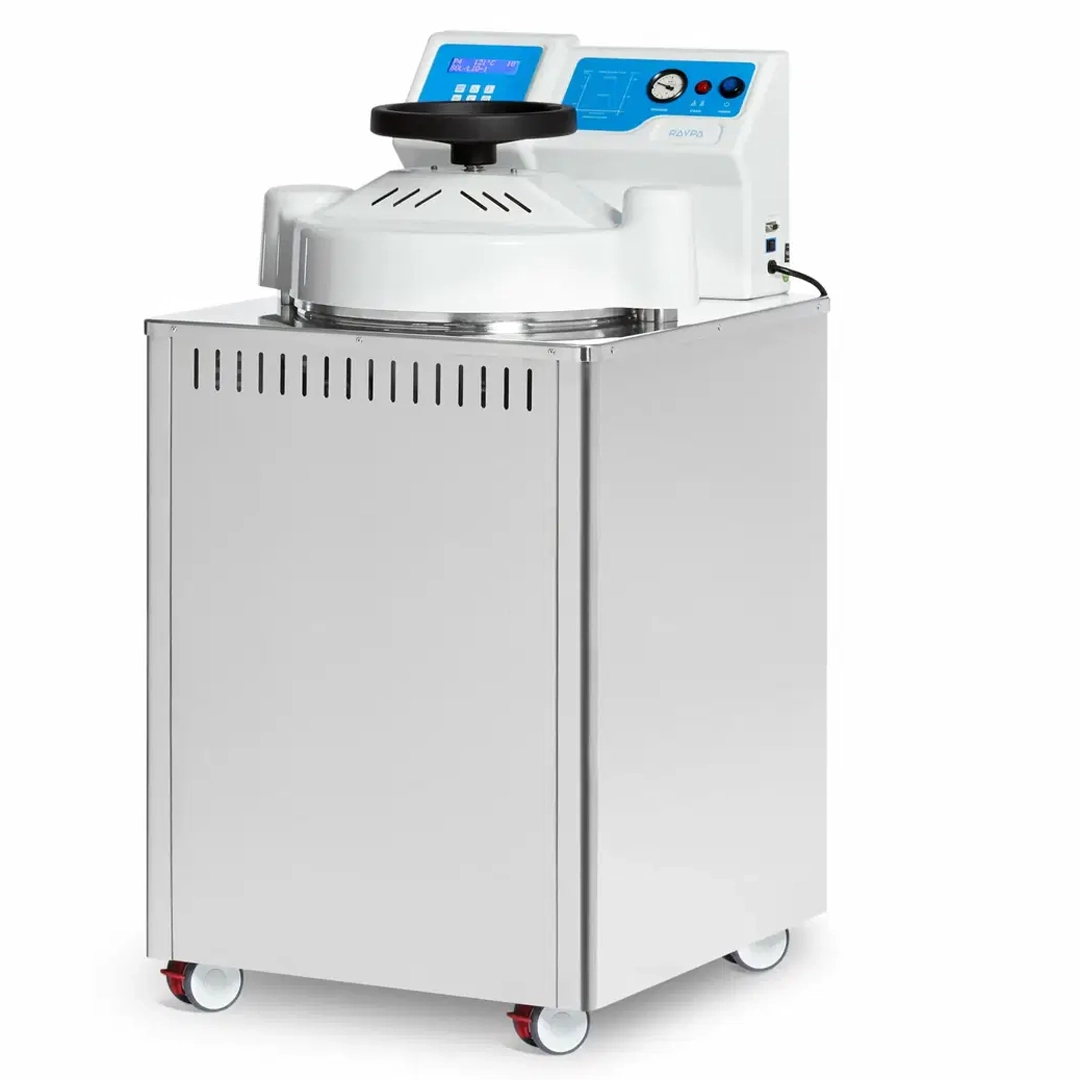
Vertical autoclaves without drying
AES Series
Vertical laboratory autoclaves without drying to sterilize laboratory materials
Cost-effective
Both solid and liquid laboratory loads
Plug-and-play installation
Benchtop autoclaves with prevacuums and drying
AHS-B Series
Benchtop laboratory autoclaves with prevacuums and drying
Plug-and-play installation
5'' touchscreen with 50 programs
Loads that require deep steam penetration
Vertical laboratory autoclaves with prevacuums and drying
AE-B Series
Vertical laboratory autoclaves with prevacuums and drying
Multiple types of sterilization
Entirely automated with a 5'' touchscreen
Solids loads dry at end of cycle