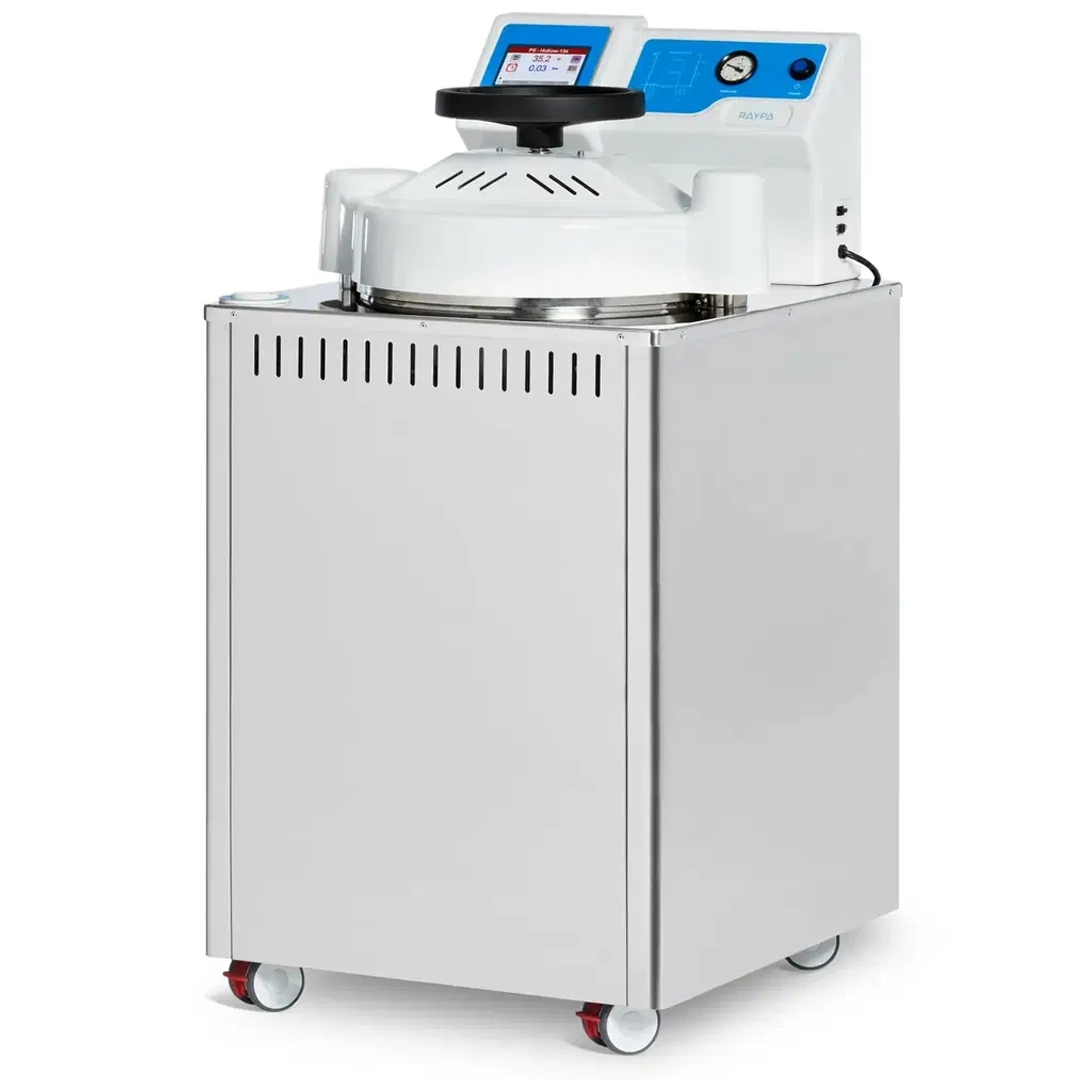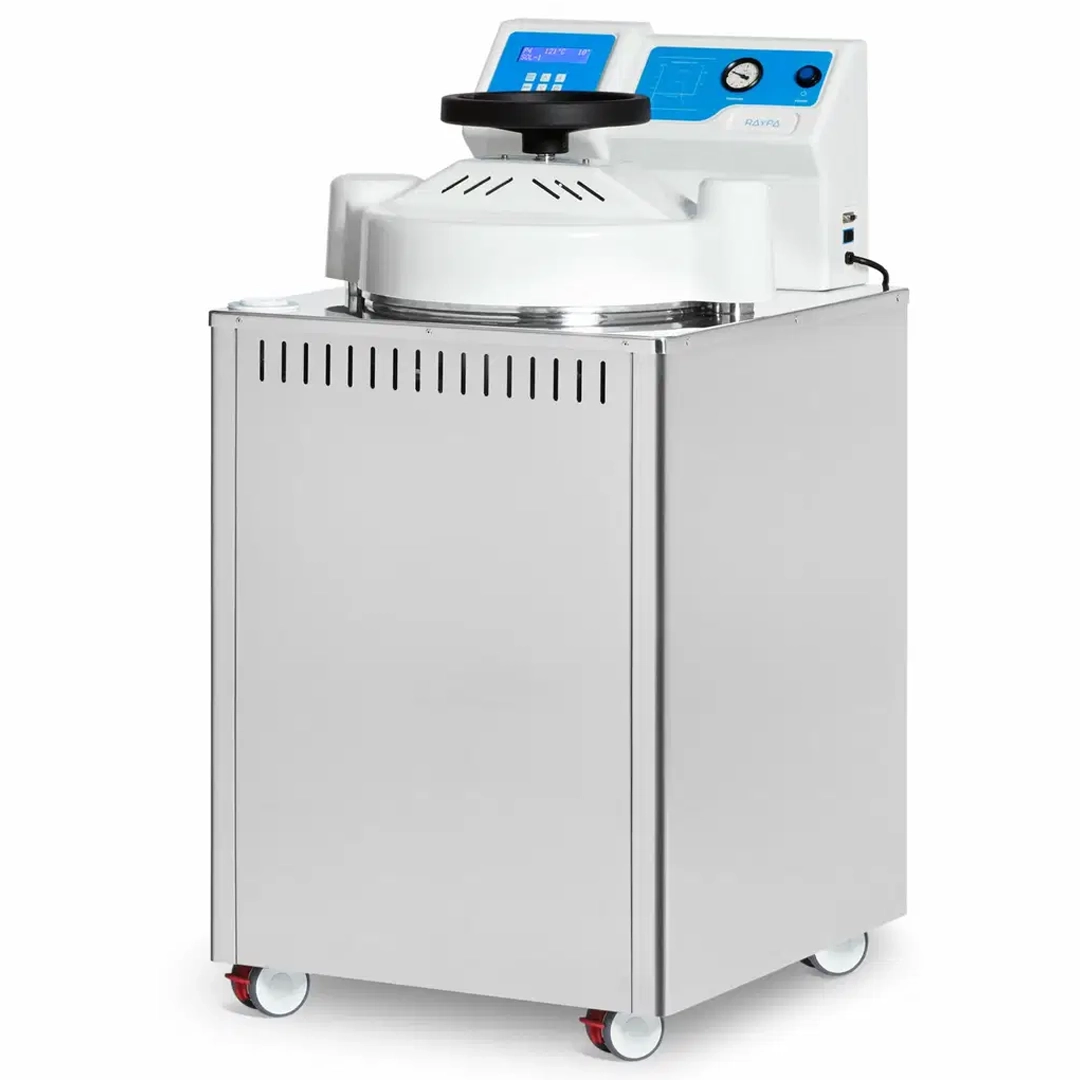
AE-DRY Series

Vertical autoclaves with drying designed for industrial, educational, and research facilities
Solid loads are fully dry at the end of cycle
Cost-effective and with robust performance
Excellent construction materials

Request a quote

Request a quote

Smart lab solutions

At LabSPX, we are committed to bringing innovative and efficient solutions to laboratories. Our Smart Lab Solutions are designed to streamline processes, enhance accuracy, and boost productivity.

Functionalities and technical specifications

Specification More info
Laboratory waste bags, porous solids and wrapped objectsThe mechanical purge of air using the vacuum pump facilitates the posterior penetration of steam, facilitating the sterilization of porous items. At the end of the cycle, they will be dry thanks to the drying function.
Liquids and culture mediaThe agar mode maintains the temperature and prevents the culture media from gelling. Installing a flexible probe allows for more precise sterilization of liquid loads.
Plastic and metal objects & glasswareIn programs for solid loads, the heating jacket and vacuum pump are activated at the end of the sterilization phase to completely dry the load.

Vertical laboratory autoclaves with drying

The AE-DRY Series vertical laboratory autoclaves with drying are suitable for laboratories that need efficient sterilization of solid loads with complete drying at the end of each cycle. These floor-standing autoclaves are optimized to reduce turnaround times, improve workflow efficiency, and eliminate the need for external drying equipment.

What are AE-DRY autoclaves used for?

The AE-DRY Series sterilizes a wide range of laboratory materials, including:

  • Wrapped and unwrapped solid loads
  • Porous and hollow objects
  • Items with complex geometries and cavities
  • Glassware, plastics, and metal instruments
  • Laboratory waste bags
  • Liquids and culture media (with appropriate programs)

They are suitable for industrial, educational, and research laboratory environments where productivity and cycle efficiency are important.

Features

The key feature of the AE-DRY Series is the integrated final drying function, which:

  • Uses a heating jacket combined with a vacuum pump
  • Ensures solid loads are completely dry at the end of the cycle
  • Eliminates the need for external drying ovens
  • Reduces handling time and overall process duration
  • Sterilization chamber and door made of AISI-316L stainless steel
  • Corrosion-resistant construction
  • Built in accordance with applicable EU quality and safety standards
  • Steam generation via internal Incoloy® 825 heating elements with protective grid

This makes the system particularly suitable for high-throughput laboratory environments.

How does the sterilization process work?

The AE-DRY Series uses a multi-phase sterilization cycle designed for efficiency and steam penetration.

Prevacuum phase

  • A vacuum pump removes air from the chamber and load
  • Typically performed using a vacuum pulse down to -0.75 Barg
  • Improves steam penetration in porous and complex loads

Heating phase

  • Water from the integrated tank is heated by Incoloy® 825 electric heating elements
  • Saturated steam is generated inside the chamber
  • Increased heating capacity is available in special models for faster cycles

Sterilization phase

  • Chamber temperature is maintained at the programmed setpoint
  • Controlled by a PT-100 Class A temperature probe
  • Optional flexible probe control available for liquid sterilization

Vacuum drying phase (solid programs only)

  • The vacuum pump applies multiple vacuum pulses
  • Heating jacket assists in complete drying of the load
  • Water returns to the integrated tank after use

Cooling phase

  • Natural cooling occurs after sterilization
  • An acoustic signal indicates when it reaches a safe opening temperature
  • In agar mode, it can maintain a selected temperature between 40 °C and 80 °C

Easy installation

These autoclaves feature plug-and-play operation:

  • Requires only an electrical connection
  • No need for dedicated plumbing or drainage
  • Integrated water tank supplies the chamber automatically
  • Manual filling of the water tank (with optional automatic network fill upgrade)

Safety features

The AE-DRY Series incorporates multiple safety features, including:

  • Overpressure safety valve
  • Thermally insulated door
  • Overtemperature safety thermostat
  • Water level sensor
  • Open door detection system
  • Pneumatic safety locking system during pressure conditions

These systems are designed to ensure safe operation during routine laboratory use.

System control

The AE-DRY Series is managed by a PID microprocessor control system with:

  • 4 predefined programs
  • 6 editable programs
  • Adjustable parameters for time, temperature, drying time, and cycle type
  • Support for solids and liquids sterilization modes
  • Optional agar mode and flexible probe control
  • Programmable auto-start up to 24 hours

Special models with increased heating capacity are available for faster processing.

Available vertical autoclaves with drying:

AE-28-DRY AE-50-DRY AE-75-DRY AE-110-DRY AE-150-DRY
Total/usable volume of the chamber (L) 33/31 55/50 79/75 115/110 175/153
Usable dimensions of the chamber (Ø x H mm) 300 x 440 300 x 710 400 x 600 400 x 850 500 x 760
External dimensions (L x D x H mm) 505 x 580 x 1110 505 x 580 x 1290 610 x 700 x 1185 610 x 700 x 1435 750 x 820 x 1400
Loading height (mm) 795 975 870 1120 1085
Net weight (Kg) 75 95 123 150 235
Power (W) 2000 or 3200 3200 or 5000 3200 or 6000 4500, 6000 or 9000 6000 or 9000
Voltage* (V) 230 230 230 400 400
Frequency (Hz) 50/60 50/60 50/60 50/60 50/60

Brochures

Download your brochure here!

Brochure AE-DRY series

Vertical autoclaves are loaded from the top. The chamber is oriented vertically, which means these units typically offer a larger internal capacity, allowing greater volumes to be sterilized in a single cycle. Their footprint is relatively compact, but they require adequate overhead clearance. Benchtop horizontal autoclaves are loaded through a front-facing door. The chamber is oriented horizontally, and the overall design is low-profile and compact, making these units well suited for laboratories or clinical environments where bench or floor space is limited. For more details you can read this blogpost.

A vertical laboratory autoclave with drying is used for steam sterilization of solid laboratory loads that must be completely dry at the end of the cycle. These systems are designed to improve turnaround time and eliminate the need for separate drying equipment in laboratory workflows.
Autoclaves with drying can sterilize wrapped and unwrapped solid loads, porous and hollow objects, glassware, plastics, metal instruments, laboratory waste bags, and, using specific programs, liquids and culture media.
Drying is achieved through a combination of a vacuum pump and a heating jacket surrounding the chamber. After sterilization, multiple vacuum pulses remove moisture while heat accelerates evaporation, leaving the load completely dry.
Steam must contact all surfaces to destroy microorganisms effectively. Air pockets trapped in porous or hollow items can block steam access, which is why vacuum‑assisted air removal is essential for reliable sterilization.
A typical cycle includes a prevacuum phase, heating phase, sterilization holding phase, vacuum drying phase for solid loads, and a natural cooling phase. An acoustic signal indicates when the chamber can be safely opened.

Related instruments

Explore similar solutions and complementary products.
Vertical autoclaves without drying
AES Series
Vertical laboratory autoclaves without drying to sterilize laboratory materials
Cost-effective
Both solid and liquid laboratory loads
Plug-and-play installation
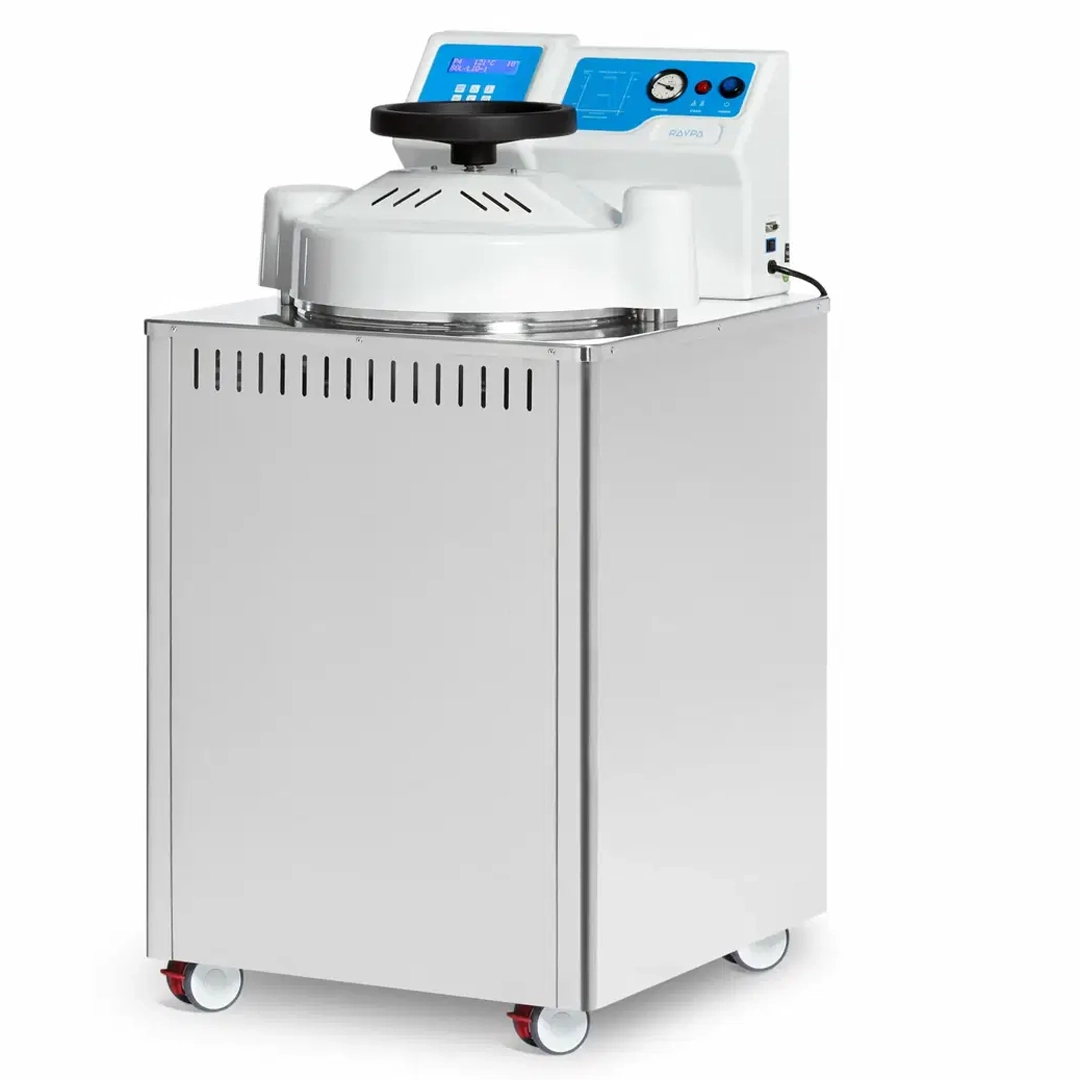
Vertical laboratory autoclaves with prevacuums and drying
AE-B Series
Vertical laboratory autoclaves with prevacuums and drying
Multiple types of sterilization
Entirely automated with a 5'' touchscreen
Solids loads dry at end of cycle
Culture Media Preparators
AE-MP Series
Standard culture media preparators: efficient solution for preparing culture media
Automatic preparation and fast dispensing
Reduced preparation time
Cost savings and decreased workload